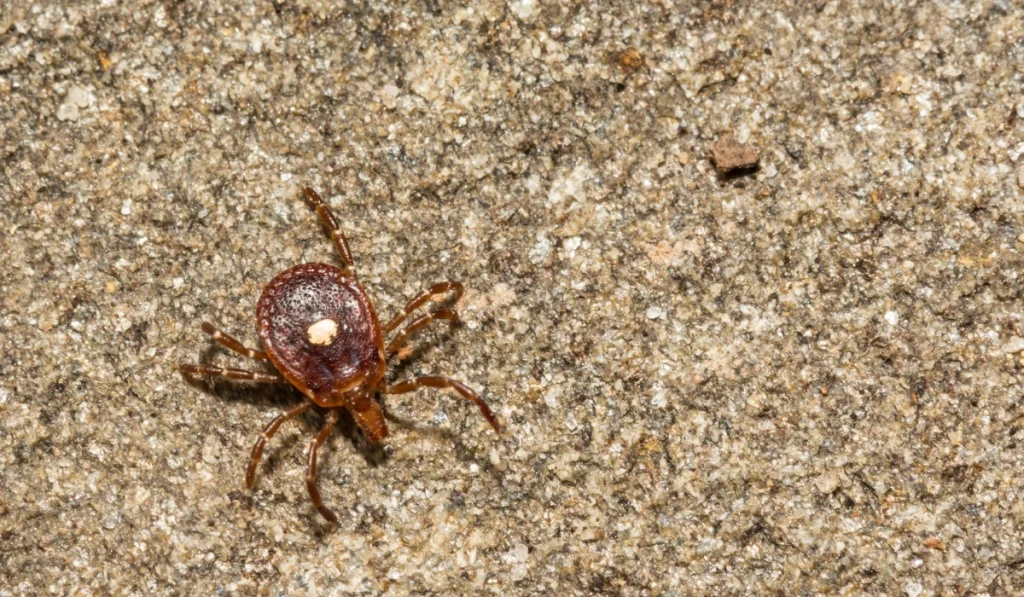


Yes, lone star ticks are found in New Jersey. They are most abundant in the southern Coastal Plain and Pinelands, but Rutgers has also documented them farther north, including Hunterdon and Somerset counties. Adult females are recognizable by a single white spot on their backs, although males and young ticks lack that marking. Lone star ticks are aggressive biters associated with ehrlichiosis and alpha-gal syndrome, making proper identification and bite prevention important for anyone spending time outdoors.
Where Are Lone Star Ticks Found in New Jersey?
Lone star ticks (Amblyomma americanum) inhabit forests and woodland edges in New Jersey. Their populations are not evenly distributed, with the greatest numbers occurring in the southern part of the state.
Southern New Jersey and the Pinelands
The Coastal Plain and Pinelands contain established lone star tick populations. These wooded landscapes provide habitat for ticks and the animals they feed on, including white-tailed deer.
According to Rutgers University’s NJ Ticks 4 Science project, lone star ticks are most abundant in these regions, although they occur elsewhere in New Jersey.
Homeowners near wooded land may encounter them along property boundaries, brushy walking paths, and vegetation bordering lawns. The risk comes from contact with ticks in these areas, not simply from living near a forest.
Lone Star Ticks in Northern New Jersey
Lone star ticks have expanded northward, with Rutgers documenting recent detections in Hunterdon and Somerset counties.
Those records confirm the species’ presence farther north but do not establish how common it is in every neighborhood. Tick populations depend on suitable habitat and available animal hosts, and conditions can differ considerably between properties.
Residents in Northern New Jersey should take precautions when entering wooded or brushy areas rather than assuming lone star ticks are exclusively a southern New Jersey problem.
How to Identify a Lone Star Tick
A single pale spot on the back is the clearest identification feature of an adult female lone star tick. However, not all lone star ticks have this marking, and feeding can change their size and appearance.
Female, Male, and Young Lone Star Ticks
Adult females have reddish-brown bodies with a distinct white or silvery spot on the upper surface of the back. The spot is easiest to recognize before the tick becomes engorged.
Adult males have pale markings around their backs rather than one central spot. Nymphs and larvae are considerably smaller and lack the adult female’s characteristic marking. Their size makes them harder to notice on skin and clothing.
A tick without a white spot could still be a lone star tick. When identification is uncertain, a clear photograph showing the upper body and markings may help a qualified identification service determine the species.
Lone Star Tick vs. Deer Tick vs. American Dog Tick
Lone star ticks are only one of several tick species found in New Jersey. Blacklegged ticks and American dog ticks have different markings and health associations.
| Feature | Lone Star Tick | Blacklegged (Deer) Tick | American Dog Tick |
| Scientific name | Amblyomma americanum | Ixodes scapularis | Dermacentor variabilis |
| Adult female appearance | Reddish-brown with one pale spot | Dark shield and reddish-brown abdomen | Brown with a pale, patterned shield |
| Adult male appearance | Pale markings around the back | Mostly dark | Pale, mottled markings |
| Main health concerns | Ehrlichiosis and alpha-gal syndrome | Lyme disease, anaplasmosis, and babesiosis | Certain spotted fever rickettsioses, with risk varying by region |
| Identification clue | Female’s single white spot | Dark, unpatterned shield | Pale markings on the shield |
The markings help distinguish adults, but immature or engorged ticks can be harder to identify. A tick’s appearance also cannot tell you whether it carries a disease-causing organism.
Other species, including the Asian longhorned tick and Gulf Coast tick, have also been recorded in New Jersey. The markings of New Jersey’s most common ticks can differ considerably, so a white spot should not be the only characteristic considered during identification.
When Are Lone Star Ticks Active in New Jersey?
Lone star ticks are generally active from March through October in New Jersey. Adults, nymphs, and larvae have different seasonal patterns, so residents may encounter them over several months.
Lone Star Tick Season by Life Stage
Adults and nymphs are most commonly encountered during spring and summer. Larvae become more abundant later in the season, particularly in fall.
Larval lone star ticks can gather in large groups sometimes called seed ticks. Because they are extremely small, a person who brushes against vegetation containing larvae may not notice them immediately.
Temperature and moisture influence activity, so the March-through-October period is a general seasonal range rather than a guarantee that ticks are inactive outside those dates.
Where Lone Star Ticks Live Around Homes
Lone star ticks favor wooded areas, forest edges, leaf litter, and low vegetation. They cannot fly or jump, but they can actively move toward nearby hosts.
Around a residential property, potential exposure areas include:
- Wooded boundaries where lawns meet trees and brush
- Walking paths bordered by overgrown vegetation
- Leaf litter and low plants near forest edges
- Areas where deer and other wildlife regularly pass
- Outdoor spaces directly beside dense vegetation
White-tailed deer are important hosts for lone star ticks, and other mammals and birds may also carry them. This is one reason ticks can be encountered outside undeveloped forests, including along the edges of residential yards.
These areas are worth inspecting, but their presence does not prove that a property has a lone star tick population.
What Health Problems Are Associated With Lone Star Tick Bites?
Lone star ticks are associated with ehrlichiosis and alpha-gal syndrome. These conditions have different causes: ehrlichiosis is a bacterial infection, while alpha-gal syndrome is an allergy that can develop after certain tick bites.
A lone star tick bite does not automatically lead to either condition. The symptoms and timing of illness provide more useful information than the bite itself.
Ehrlichiosis
Ehrlichiosis is caused by bacteria that can be transmitted through the bite of an infected lone star tick. The species is a known vector of Ehrlichia chaffeensis and Ehrlichia ewingii.
Symptoms typically begin about five to fourteen days after an infected bite and may include fever, headache, fatigue, muscle aches, and sometimes a rash. Some people do not remember being bitten, particularly when the tick was small or attached in a difficult-to-see location.
The New Jersey Department of Health’s tick-borne disease information explains the illnesses associated with ticks in the state and the importance of prevention.
If you develop fever or other concerning symptoms after spending time in tick habitat, contact a healthcare professional and mention the possible exposure. Ehrlichiosis can become serious when treatment is delayed, so medical assessment should not depend on whether you still have the tick.
Alpha-Gal Syndrome
Alpha-gal syndrome is an allergic condition linked to certain tick bites. In the United States, the lone star tick is the species most closely associated with its development.
Alpha-gal is a sugar molecule found in most mammals but not naturally produced by humans. In some people, exposure through a tick bite can trigger an immune response that later causes reactions to foods or products containing alpha-gal.
Beef, pork, lamb, and other mammalian meats are common triggers. Some affected people also react to dairy products, gelatin, or certain medications containing mammalian ingredients.
Unlike many food allergies, symptoms often develop several hours after eating. Reactions commonly occur two to six hours after exposure and may include:
- Hives, itching, or skin redness
- Stomach pain, nausea, vomiting, or diarrhea
- Swelling of the lips, tongue, or throat
- Breathing difficulties
- Dizziness, faintness, or low blood pressure
Symptoms of alpha-gal syndrome may first appear weeks or months after the tick bite associated with the condition. This can make the connection between a previous outdoor activity and a later allergic reaction difficult to recognize.
The CDC’s guidance on alpha-gal syndrome explains that not everyone bitten by a lone star tick develops the allergy. Diagnosis involves reviewing symptoms and exposure history, along with appropriate medical testing.
Anyone experiencing unexplained allergic reactions should consult a healthcare professional. Severe symptoms, especially breathing difficulties or signs of anaphylaxis, require emergency medical care.
Can Lone Star Ticks Transmit Lyme Disease?
Lone star ticks are not established vectors of Borrelia burgdorferi, the bacterium responsible for Lyme disease. In New Jersey, blacklegged ticks are the primary species associated with Lyme disease transmission.
This distinction is useful when identifying an attached tick, but it should not determine whether someone seeks medical care. A person can still develop other health problems after a lone star tick bite.
If symptoms appear following outdoor exposure, tell your healthcare provider where and when the exposure may have occurred.
What to Do If You Find a Lone Star Tick Attached to Your Skin
Remove an attached tick promptly using clean, fine-tipped tweezers. Avoid waiting for it to detach or applying household substances intended to make it release its grip.
How to Remove an Attached Tick
- Grasp the tick close to the skin. Position the tweezers near the mouthparts without squeezing the tick’s body.
- Pull upward steadily. Use even pressure without twisting or jerking.
- Clean the area. Wash the bite site and your hands with soap and water or rubbing alcohol.
- Dispose of the tick safely. Place it in a sealed container, wrap it securely in tape, or put it in alcohol. Do not crush it with bare fingers.
- Check for additional ticks. Examine the scalp, behind the ears, under the arms, around the waist, and behind the knees.
If mouthparts remain in the skin and cannot be removed easily with tweezers, avoid digging into the area. Allow the skin to heal naturally.
Do not use petroleum jelly, nail polish, matches, or heat to remove an attached tick. These methods can delay proper removal.
When to Seek Medical Advice
Record the date of the bite and where you may have encountered the tick. A photograph can assist with species identification, although identification cannot establish whether the tick transmitted a pathogen.
Contact a healthcare professional if fever, rash, unusual fatigue, or other concerning symptoms develop in the following days or weeks. Mention any recent exposure to wooded or brushy areas, even if you are unsure when the bite occurred.
Unexplained allergic reactions after eating mammalian meat should also be discussed with a medical provider, particularly when there is a history of tick exposure.
How to Reduce Lone Star Tick Exposure Around Your Home
Tick prevention begins with reducing contact between people, pets, and the vegetation where ticks may be waiting. Yard maintenance helps address common exposure areas, while repellents and regular checks provide protection during outdoor activities.
Reduce Tick Habitat Near Frequently Used Areas
Focus first on patios, play areas, walkways, and other places your household uses regularly.
Keep grass maintained, remove excess leaf litter, and cut back overgrown plants along paths and wooded boundaries. Pay attention to shaded areas where the lawn meets dense vegetation.
Where the property layout allows, position outdoor seating and children’s play equipment away from brushy woodland edges. Maintain clear walking paths so residents can move through the yard without brushing against tall grass or shrubs.
These measures can reduce contact with potential tick habitat, but they do not prevent wildlife from introducing ticks onto a property.
Protect Yourself and Your Family Outdoors
Use an EPA-registered insect repellent according to its label when entering areas where ticks may be present. Permethrin-treated clothing and outdoor gear can provide additional protection when used as directed. Products intended for clothing should not be applied directly to skin.
Stay near the center of maintained trails when hiking and avoid walking through dense brush where possible.
After outdoor activities, inspect clothing and perform a full-body tick check. Showering after returning indoors can help remove unattached ticks and provides an opportunity to examine the skin.
Check children carefully around the scalp, behind the ears, near the waistband, and behind the knees. Small ticks can be difficult to see without a deliberate inspection.
Check Pets After Outdoor Activities
Dogs can encounter lone star ticks along wooded trails, brushy yard boundaries, and areas used by wildlife.
After outdoor activity, inspect the ears, neck, collar area, legs, and spaces between the toes. Thick fur can conceal small ticks, so checking by touch as well as sight may help.
Ask your veterinarian about tick prevention products suitable for your pet’s species, age, and health. Never assume that a product formulated for dogs is safe for cats.
Regular pet checks remain useful even when preventive products are being used.
When Professional Tick Control Makes Sense in New Jersey
If you repeatedly find ticks on family members, pets, or clothing after spending time in your yard, inspect the areas where those encounters are occurring. Wooded boundaries, overgrown paths, and vegetation beside outdoor gathering spaces deserve particular attention.
Professional tick control begins with evaluating the property rather than assuming the same treatment is suitable for every yard. Vegetation, wildlife movement, and the location of frequently used outdoor spaces can all influence the recommended approach.
BHB Pest Elimination provides flea and tick control for residential properties. Its services can be combined with practical yard maintenance and personal protection to help address recurring tick exposure.
For homeowners in Northern New Jersey, BHB Pest Elimination can assess the outdoor areas where ticks have been encountered and recommend a property-specific approach. If ticks continue to appear around your home, contact BHB Pest Elimination to request an inspection and discuss the next steps.
Frequently Asked Questions About Lone Star Ticks in New Jersey
Are Lone Star Ticks Common in Northern New Jersey?
Lone star ticks have been detected farther north in New Jersey, including Hunterdon and Somerset counties. However, they are most abundant in the southern Coastal Plain and Pinelands. Northern New Jersey residents can still encounter them in suitable wooded habitats.
Do All Lone Star Ticks Have a White Spot?
No. Only adult females have the distinctive single pale spot. Adult males have different markings, and immature ticks lack the female’s characteristic spot. A missing white spot does not rule out a lone star tick.
What Months Are Lone Star Ticks Active in New Jersey?
Lone star ticks are generally active from March through October. Adults and nymphs are commonly encountered during spring and summer, while larvae become more abundant later in the season. Weather and local conditions can affect activity.
Can a Lone Star Tick Bite Cause a Red Meat Allergy?
Yes. Lone star tick bites are associated with alpha-gal syndrome, which can cause delayed allergic reactions to mammalian meat and certain other products. Not everyone bitten develops the condition. Medical evaluation is needed when symptoms suggest a possible allergy.
Does Every Lone Star Tick Bite Require Medical Treatment?
No. Many bites do not lead to illness or allergy. Remove the tick promptly, clean the area, and monitor for symptoms. Seek medical advice if fever, rash, unusual illness, or possible allergic reactions develop after tick exposure.