

Flying ants become a problem in New Jersey when they are emerging indoors, coming from structural wood, or signaling a mature carpenter ant colony. They can also be mistaken for termite swarmers. A few winged ants outside are not necessarily cause for concern, but repeated indoor swarms deserve a closer look because the source may be inside or near the building.
Why Flying Ants Inside a House Matter
Finding one winged ant indoors does not prove there is a nest in the house. An insect can get inside through an open door, window, utility gap, or another small opening while ants are swarming outdoors.
A group of winged ants repeatedly appearing around the same window, wall, ceiling, or structural opening is different. That pattern raises a more useful question: where are the ants coming from?
Indoor Swarmers Can Point to a Nearby Colony
Winged ants are reproductive members of a colony. When they appear to be coming directly from a wall void, window frame, trim, or another part of the building, there may be a colony in that structure or very close to it.
The exact nest location may still be hard to pinpoint. Ants can move through concealed spaces before they become visible, so the place where they enter the room is not always the place where they are nesting.
Repeated activity is more informative. Note where the swarmers first appear, whether they return to the same area, and whether worker ants are also active nearby.
Getting Rid of the Swarmers Is Not the Same as Removing the Colony
Winged ants make up only part of an established colony. Removing the insects at a window may solve the immediate nuisance, but workers, immature ants, and the queen can remain hidden in the nest.
That distinction matters when ants are coming from a structural cavity. Effective ant control depends on identifying the species and finding the source instead of treating only the ants that happen to be visible.
What Flying Ants Actually Are
“Flying ant” is not a species name. It describes the winged reproductive males and females produced by ant colonies. These ants are also called swarmers or alates.
According to Colorado State University Extension’s guidance on ants in the home, only a small portion of a colony consists of winged reproductives. They periodically leave the colony in mating flights. Fertilized females can then attempt to establish new colonies, while the males die after the mating period.
Why So Many Can Appear at Once
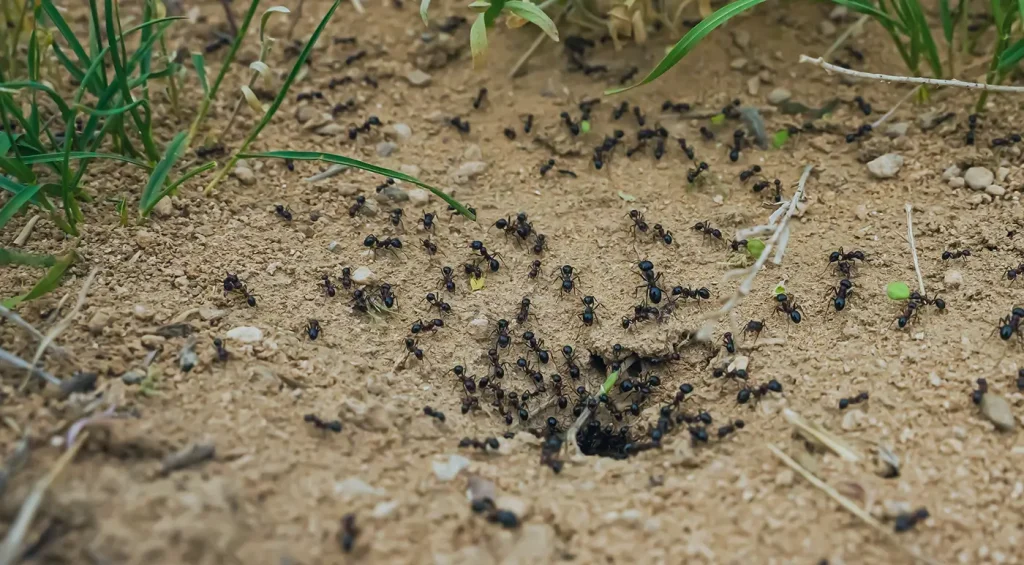
Most ants seen around a house are wingless workers. Reproductive ants behave differently. Many may leave a colony during the same swarming period, creating what looks like a sudden infestation even when the colony itself has been present unnoticed.
Colorado State University notes that swarms often occur during favorable weather and may follow rainfall. That can explain a sudden burst of flying ants outdoors.
The location still matters more than the weather. Ants swarming over a lawn or around landscaping are not the same concern as winged ants repeatedly emerging from an interior wall or window frame.
Why Carpenter Ant Swarmers Deserve More Attention
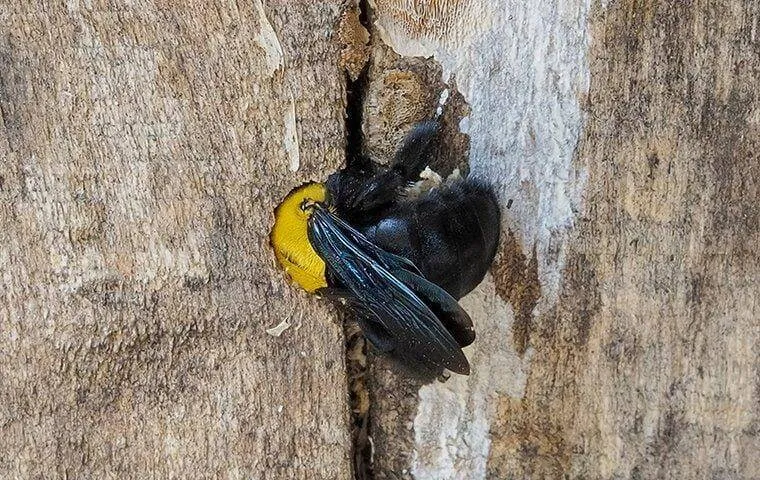
Not every flying ant in New Jersey is a carpenter ant. Carpenter ants are worth ruling out, however, because they nest in wood and can establish colonies in structural areas of a home.
Rutgers NJAES guidance on carpenter ants and their control identifies eight carpenter ant species in the northeastern United States. The black carpenter ant, Camponotus pennsylvanicus, is the most common of the group.
Carpenter Ants Excavate Wood Rather Than Eat It
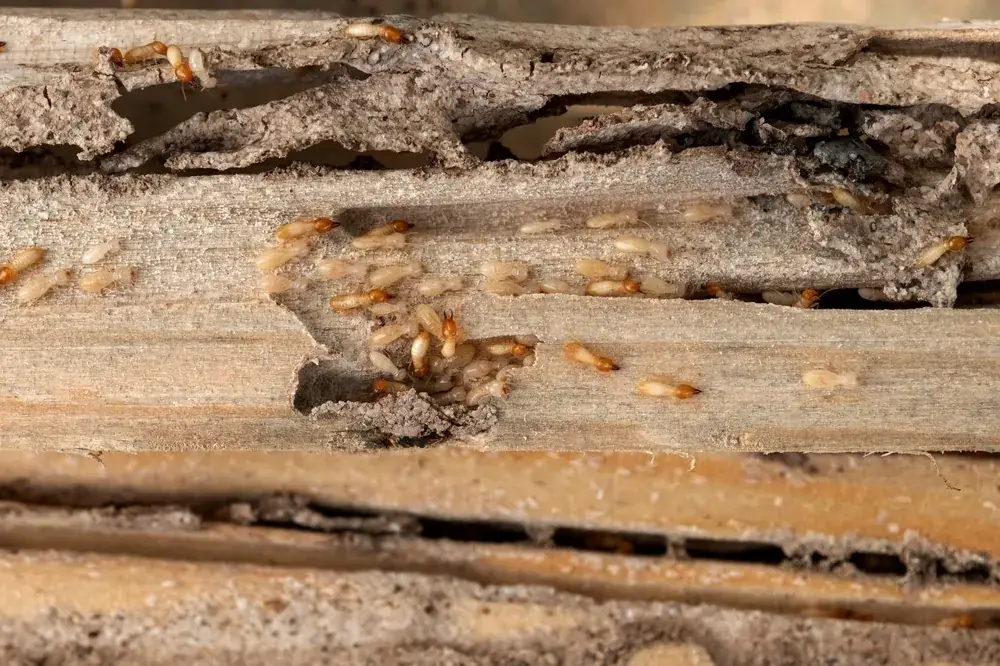
Carpenter ants are often compared with termites because both may be found around wood, but they use it differently. Termites consume cellulose. Carpenter ants excavate wood to create nesting galleries.
Rutgers describes carpenter ant galleries as relatively clean and notes that piles of wood debris may appear near nest sites. That debris can collect below an opening, near trim, around a window frame, or in another area where ants are removing material.
Debris by itself is not enough to identify a carpenter ant nest. It becomes more useful when it appears alongside recurring ant activity, damp wood, or other signs around the same structural area.
A Swarm May Come From a Colony That Is Years Old
Seeing carpenter ant swarmers does not necessarily mean a colony has just moved in. By the time a colony produces winged reproductives, it may have been developing for years.
Rutgers reports that a new carpenter ant colony generally requires three to six years to mature. A mature colony may produce roughly 200 to 400 winged forms in a year.
That helps explain why a homeowner can suddenly encounter dozens of flying carpenter ants despite having noticed little activity beforehand. The swarm is new. The colony responsible for it may not be.
Moisture Can Help Narrow Down the Nest Location
Carpenter ants frequently use wood that is moist or partially decayed, although they can also occupy existing dry cavities. When carpenter ants are suspected, checking the condition of the surrounding wood can help narrow the search.
Rutgers lists common nesting sites that include window and door frames, porch posts, siding, floor joists, porch voids, wood touching soil, and wood that has become damp because of faulty plumbing.
A carpenter ant sighting does not automatically mean the house has a leak. It does make persistent moisture and damaged wood worth checking, particularly when ants keep appearing from the same structural area.
Conditions Worth Checking
Look more closely at areas with:
- Plumbing leaks near cabinets, walls, or flooring
- Window or door frames that stay damp or have begun to deteriorate
- Roof or flashing problems that allow water into wood
- Soft or damaged porch and exterior components
- Wood in direct contact with soil
- Drainage problems that repeatedly wet the same part of the structure
Fixing a moisture problem will not necessarily eliminate a colony that is already established. It does remove one condition that can make a location suitable for carpenter ant nesting.
Flying Ants vs. Termites: Three Differences to Check
Flying ants and termite swarmers are easy to confuse at a glance. Both have wings, both can suddenly appear in groups, and both may collect near windows or light.
The University of Maryland Extension comparison of flying ants and termites points to three useful features.
|
Feature |
Flying Ant |
Termite Swarmer |
|
Antennae |
Elbowed |
Straight |
|
Waist |
Narrow and pinched |
Broad, without a pinched waist |
|
Wings |
Front pair longer than rear pair |
Front and rear wings similar in size |
Do Not Rely on Color Alone
Body shape is generally more useful than color for separating the two. A flying ant has the familiar pinched waist of an ant, along with bent antennae. Its front wings are noticeably longer than its hind wings.
A termite swarmer lacks that narrow waist. Its antennae are straighter, and the two pairs of wings are similar in length.
BHB’s information about termite swarmers and the signs associated with their appearance adds useful context when dark, winged insects are appearing around windows or other parts of a building.
When the insect is difficult to identify, keep an intact specimen or take a clear close-up photo. Confirmed termite activity calls for a different inspection and treatment approach, which is why termite control should not be treated as interchangeable with ant treatment.
Other Signs That Can Help Locate Carpenter Ant Activity
Winged ants are only one clue. Looking at what is happening around them can make it easier to determine whether carpenter ants are nesting in or near the building.
Potential nesting areas include window and door frames, siding, floor joists, porches, wall voids, and other places where wood has been exposed to moisture. Coarse debris near an opening can provide another clue because carpenter ants remove material while excavating galleries.
Follow the Pattern, Not One Ant
A carpenter ant on a kitchen counter does not necessarily have a nest in the kitchen. Rutgers reports that carpenter ants can travel more than 100 yards while searching for food or establishing satellite colonies.
Instead of focusing on a single ant, watch for patterns:
- Where winged ants first appear
- Whether swarmers return to the same location
- Where worker ants regularly travel
- Whether wood debris is accumulating near an opening
- Whether nearby wood is damp, soft, or deteriorated
- Whether ants appear to be coming from inside the structure
These observations can narrow the area that needs to be inspected without assuming the nest is located wherever the first ant was seen.
How to Make a New Jersey Home Less Favorable to Ants
Prevention starts with reducing the food, moisture, nesting conditions, and access points ants can use around a house. Which measures matter most will depend on the species involved.
For carpenter ants, pay particular attention to water. Repair plumbing leaks, drainage problems, and exterior defects that repeatedly wet structural wood. Once the source of moisture has been corrected, deteriorated wood can be evaluated for repair or replacement.
Reduce Access and Food Sources
Other practical steps include:
- Seal openings around windows, doors, utility penetrations, and other known ant entry points.
- Trim branches, vines, and shrubs that touch siding or roofing.
- Keep firewood away from the house and off the ground when practical.
- Store food in closed containers and clean up spills, crumbs, and residues.
- Correct areas where water repeatedly collects next to the foundation or exterior walls.
These measures can make a property less attractive to ants, but prevention and nest removal are two different jobs. If flying ants continue emerging from inside the building, the source still needs to be found.
When Flying Ants Call for a Professional Inspection
Flying ants outside do not automatically mean there is an infestation in the house. Repeated swarms indoors, ants emerging from structural areas, carpenter ant activity around damp wood, or winged insects that might actually be termites are stronger reasons to have the problem identified.
If flying ants keep turning up inside your New Jersey home, visit BHB Pest Elimination to see the pest control services available for properties in New Jersey and New York. If you need help identifying the insects or finding the source of an indoor swarm, contact BHB Pest Elimination to request assistance.