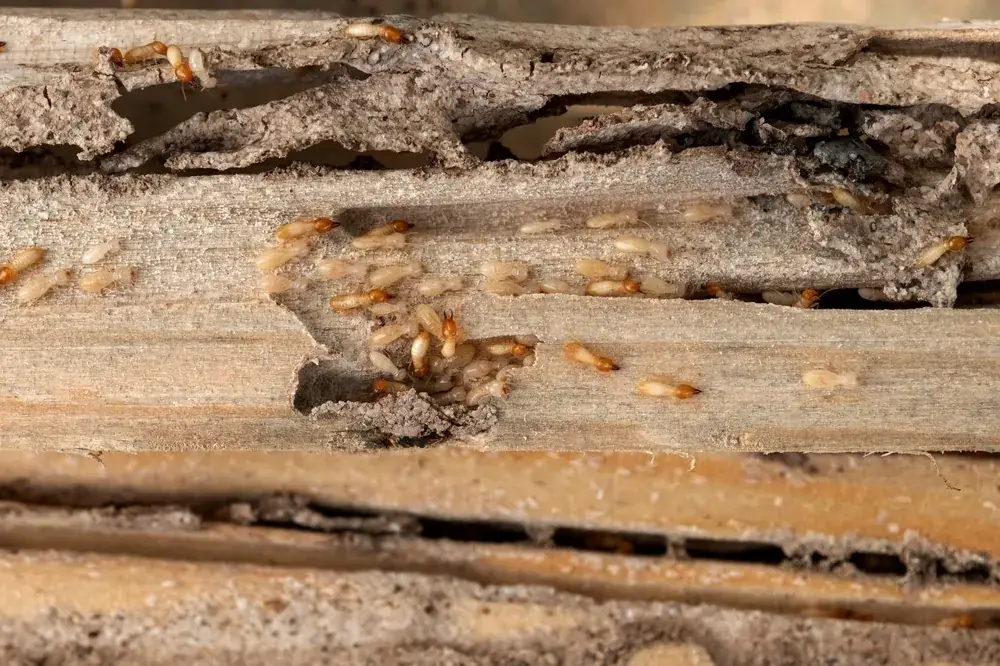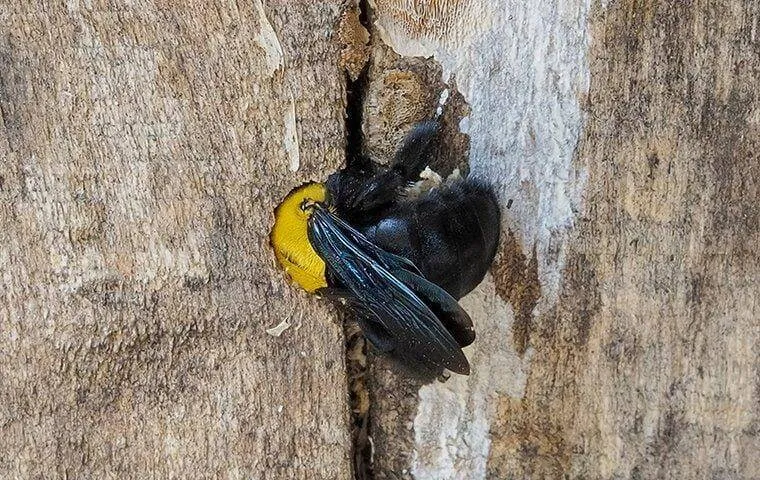


When most people think about potentially dangerous, yellow-jacketed bugs, most think the word “bee,” yet picture distinct examples of the wasp family. The fact of the matter is that overall, the members of bee colonies are usually much less harmful than wasps. This is not to say bees are completely unable to cause harm to humankind — one unique exception to this trend is the bigger, plumper carpenter bee. Carpenter bees don’t consume nectar from flowers like their brethren; rather, they chow down on wood, even building their nests inside lumber. Ever discovered previously non-existent holes in your beautiful wooden porch too wide in diameter for something like a termite to dig? These buzzy bugs are likely the culprits.
The Dangers and Damages of the Carpenter Bee
If your New York property has wood, you need to protect it! Keep an eye out for hungry carpenter bees during the spring and summer months. The damage they can cause to your home or porch is nothing to sneer at. They don’t mow their way through timber the way woodworking termites are infamous for, but if left unchecked for a population to prosper, the devastation will become extensive over time.
But that’s not all! Where these carpenters are concerned, damage to lumber should be your biggest concern, but not your only consideration. Sure, they look big, plump, and bumbling, but just like any species of buzzing bee, their workers have a venomous sting and a propensity to sting the humans they perceive to be attacking them or disturbing their nests. While their pernicious pricks are not fatal to the average human, they can be very, very dangerous for those with existent allergies.
How to Keep Carpenter Bees Away From Your New York Property
It’s never too early to start keeping an eye out for and setting up measures to prevent pests like the carpenter bee from attacking the wooden segments of your home. If you want to make these components — and your property as a whole — less enticing, try implementing some of these simple strategies around your New York home.
If you’ve suffered the attacks of carpenter bees in the boards around your deck or porch, work to plug them up during autumn, while the insects are away. Don’t be trigger-happy on the fixes, though; if the bees are still around, they will re-drill the holes you plug or create new ones.
The carpenter bees’ favorite kind of wood to snack on is rough and unfinished. If you have any unfinished wood on your New York property, smooth the exposed portions out and either paint it over or add a coat of varnish.
For any unfinished porch or deck wood, there are further alternatives you can use.
- Cover the ends of wood planks with tough, metal materials like flashing or screening.
- If you have any logs or boards on your walls or door frames, watch out for open gaps or cracks in the wood. Carpenter bees can worm their ways into these crevices and then begin eating the wood from the inside. When you close these gaps, make sure you’re not trapping any bees inside, forcing them to chew their way out.
- Want a natural alternative to the common, everyday store-bought bug spray? The unique smell of citrus oil is one that carpenter bees find absolutely disgusting, so pour some into a bottle and get spraying!
- Professional products and materials are far more effective at keeping carpenter bees away. Look to BHB Pest Elimination for a treatment specially developed for these buzzing buggers.
Don’t let the threat of carpenter bees confuse or overwhelm you! If you need any assistance with treatment and prevention, or simply just advice, contact BHB Pest Elimination right away. Technicians are trained to identify carpenter bee activity and plan the right service for New York homes.