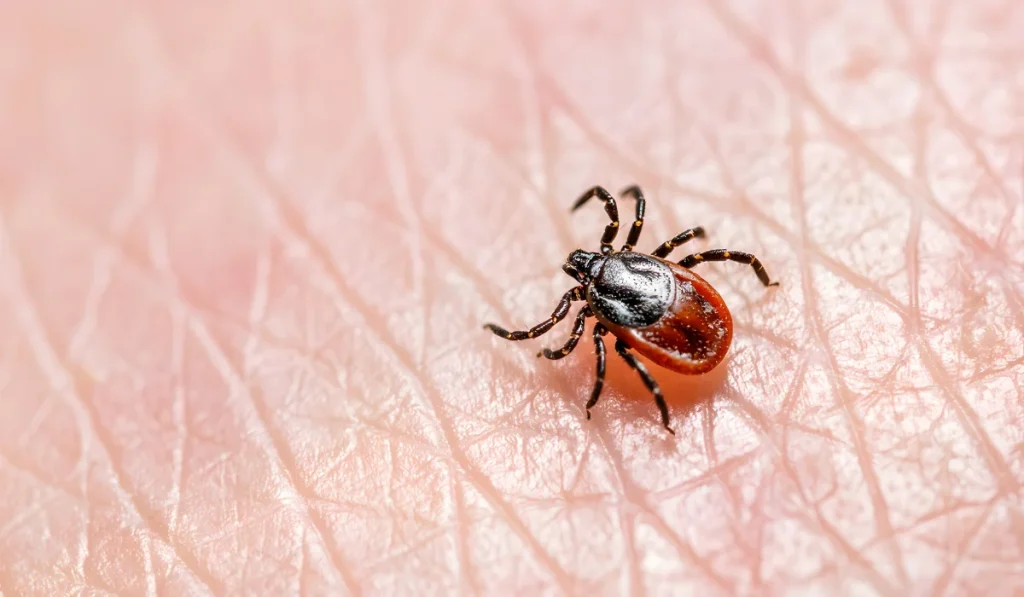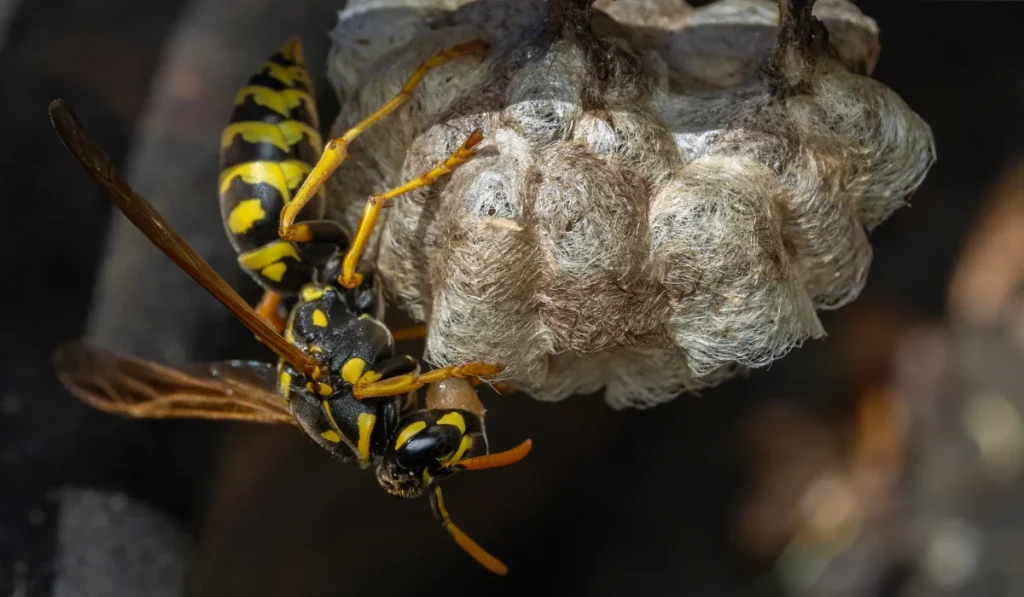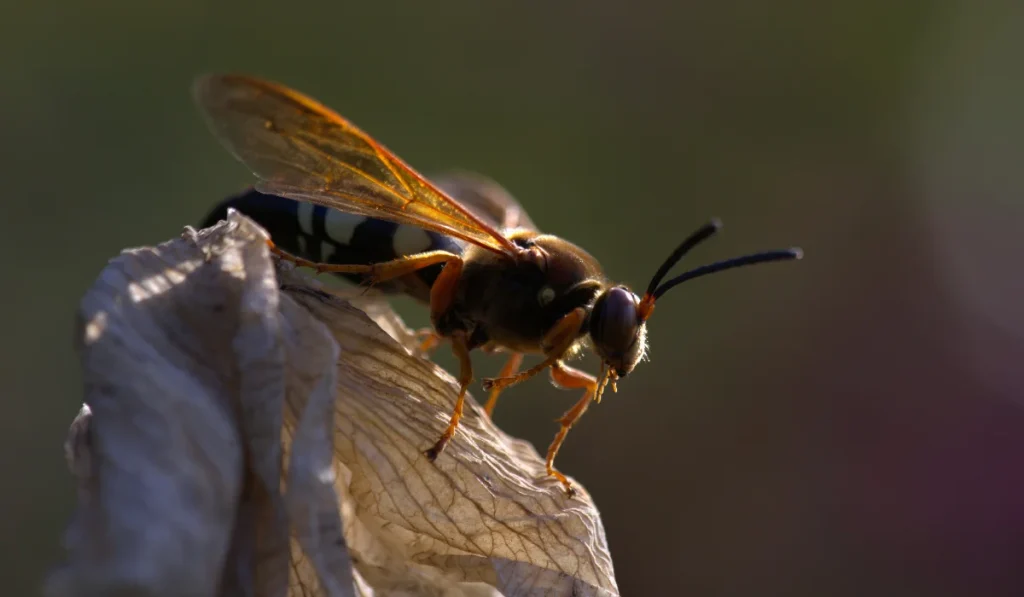


The ticks New Jersey residents are most likely to encounter include blacklegged ticks, lone star ticks, and American dog ticks, along with the invasive Asian longhorned tick and the expanding Gulf Coast tick. Each has different markings, preferred habitats, active seasons, and health significance. Knowing those differences can help you identify a tick, understand where it may have come from, and reduce the chances of another encounter.
Which Ticks Are Common in New Jersey?
Rutgers identifies blacklegged ticks, lone star ticks, and American dog ticks as established New Jersey species that commonly come into contact with people. Current state surveillance also tracks Gulf Coast ticks as their range expands and Asian longhorned ticks, an invasive species now established in New Jersey.
“Common” does not necessarily mean “most dangerous.” A species may be widespread without being an important human disease vector in New Jersey, while another may receive greater attention because of the pathogens it can carry.
| Tick Species | Identification Clue | Typical Habitat | New Jersey Significance |
| Blacklegged tick | Dark legs; adult female has a reddish-brown abdomen | Wooded areas and forest edges | Main Lyme disease vector in New Jersey |
| Lone star tick | Adult female has one pale spot on the back | Forests and forest edges | Frequent human biter associated with ehrlichiosis and alpha-gal syndrome |
| American dog tick | Brown with pale or whitish markings | Fields, tall grass, meadows, forest edges | Frequent human biter; recent NJ studies cited by Rutgers did not detect pathogenic rickettsiae |
| Gulf Coast tick | Ornate markings on adults | Open and grassy habitats | Expanding species monitored for Rickettsia parkeri |
| Asian longhorned tick | Small brown tick that can occur in large numbers | Tall grass, meadows, pastures, ecotones | Invasive species of concern for animals; not currently known to transmit human pathogens in NJ |
How to Identify New Jersey’s Main Human-Biting Ticks
Markings and body shape can help identify adult ticks, but immature and engorged ticks are harder to distinguish. Nymphs are considerably smaller than adults, and feeding can change a tick’s size and appearance.
If you remove an attached tick, keeping it in a sealed container can make identification easier if questions arise later.
Blacklegged Tick
The blacklegged tick, Ixodes scapularis, is also known as the deer tick. In New Jersey, it is the tick most closely associated with Lyme disease and several other tickborne infections.
Adult females have dark legs and a dark shield near the front of the body, with a reddish-brown abdomen behind it. Nymphs are much smaller and may be difficult to notice before they feed.
According to the Rutgers Cooperative Extension tick resource, blacklegged ticks are associated with Lyme disease, anaplasmosis, babesiosis, and Powassan virus. Current Rutgers surveillance also lists Borrelia miyamotoi disease among the infections this species can transmit.
Blacklegged ticks favor wooded areas and forest edges. Rutgers notes that they are sensitive to drying, so shaded environments provide better conditions than hot, exposed areas. Around a home, that can include wooded property lines, shaded leaf litter, and the transition between a maintained yard and surrounding woods.
Lone Star Tick
The lone star tick, Amblyomma americanum, is a frequent human biter in New Jersey. Adult females are relatively easy to recognize because of the single pale or white spot in the center of the back. Adult males have lighter markings along the body rather than one central spot.
Rutgers reports that lone star ticks inhabit forests and forest edges throughout New Jersey, with the greatest numbers in the Coastal Plain and Pinelands. Their range has also moved farther north, with detections documented in Hunterdon and Somerset counties.
Lone star ticks can carry the bacteria responsible for ehrlichiosis. Their bites are also associated with alpha-gal syndrome, an allergy to alpha-gal, a sugar found in meat and other products from mammals. Alpha-gal syndrome is an allergic condition, not an infectious disease, so it is more accurate to describe tick bites as being associated with its development rather than saying the tick transmits it like a bacterial infection.
In some parts of southern New Jersey where lone star ticks are well established, Rutgers has reported that they may outnumber blacklegged ticks by three to one or more. That finding applies to specific locations and should not be treated as a statewide ratio.
American Dog Tick
The American dog tick, Dermacentor variabilis, is generally larger and more heavily marked than the blacklegged tick. Adults are brown with pale or whitish patterns across the upper surface.
Habitat is another useful clue. Rutgers reports that American dog ticks are commonly found in fields, meadows, grassy areas, forest edges, and tall grass along animal trails. In urban settings, they may also occur in vacant lots, utility rights-of-way, and roadsides with overgrown grass.
Only adult American dog ticks commonly bite people. The immature stages feed primarily on small mammals.
Older and broader tick references often describe the American dog tick as a vector of spotted fever group rickettsiae. Current New Jersey surveillance provides more local context. Rutgers reports that recent studies of American dog ticks collected in the state did not detect pathogenic rickettsial bacteria. NJ Ticks 4 Science therefore does not currently test this species for human pathogens.
Other Ticks New Jersey Residents May Encounter
Two additional ticks deserve attention because they have changed New Jersey’s tick landscape. The Gulf Coast tick is expanding into the state, while the Asian longhorned tick has become established after its recognition in New Jersey.
Gulf Coast Tick
The Gulf Coast tick, Amblyomma maculatum, is an expanding species in New Jersey. Rutgers currently includes it among the species prioritized for human-health surveillance and tests submitted Gulf Coast ticks for Rickettsia parkeri, the bacterium associated with Tidewater spotted fever.
The NJ Ticks 4 Science species resource identifies Gulf Coast ticks as one of the species in New Jersey capable of biting people and carrying a pathogen of human concern.
That does not mean Gulf Coast ticks are widespread throughout New Jersey or as commonly encountered as blacklegged ticks. Their importance comes from their expanding range and the need to track where they are becoming established.
Asian Longhorned Tick
The Asian longhorned tick, Haemaphysalis longicornis, was first reported as an established U.S. population in New Jersey in 2017. Rutgers later determined from an older specimen that the species had been present in the state since at least 2013.
Asian longhorned ticks favor tall grass, meadows, pastures, farms, and ecotones where grassy and wooded habitats meet. Rutgers has documented large infestations in several New Jersey counties, and the species can build up in high numbers on cattle and other animals.
People can be bitten, but Rutgers describes human feeding as uncommon compared with feeding on animals. At this time, Asian longhorned ticks are not known to transmit pathogens that cause human disease in New Jersey. Their established populations are still important because they can affect livestock, dogs, wildlife, and other animals.
When Are Ticks Active in New Jersey?
Tick exposure in New Jersey is not limited to summer. Different species and life stages become active at different times, and at least one human-biting species may be active whenever temperatures are favorable.
Blacklegged Ticks Can Remain Active in Cold Months
Blacklegged tick nymphs are active from about April through November, with Rutgers reporting peak abundance from May through July. Adults are active from October through April and can still be encountered during winter when temperatures rise above freezing.
This makes blacklegged ticks different from many of the warm-season pests homeowners associate with summer. Fall leaf cleanup, early spring yard work, or walking near wooded edges on a mild winter day can still result in exposure.
Lone Star and American Dog Ticks Peak in Warmer Weather
Lone star ticks are active in New Jersey from March through October. American dog ticks are active from March through September, with adults most abundant from April through July.
Asian longhorned ticks also remain active from March through October. The overlap among these species makes spring through early fall the period when residents can encounter the widest range of ticks, while blacklegged adults extend the season into colder months.
Which New Jersey Ticks Are Linked to Human Disease?
The health concerns associated with a tick bite depend heavily on the species involved.
Blacklegged ticks are associated in New Jersey with Lyme disease, anaplasmosis, babesiosis, Borrelia miyamotoi disease, and Powassan virus. Lone star ticks can transmit the bacteria that cause ehrlichiosis and are associated with alpha-gal syndrome. Gulf Coast ticks are being monitored in the state for Rickettsia parkeri.
Lyme disease remains especially important in New Jersey. A 2025 New Jersey Department of Health vector-borne surveillance report recorded nearly 6,600 preliminary Lyme disease cases reported during 2025. The largest numbers were reported in Hunterdon and Morris counties in northwestern New Jersey and Monmouth and Ocean counties in the state’s central-east region.
Finding an attached blacklegged tick does not mean it carried the Lyme disease bacterium, just as finding another tick species does not establish that a pathogen was transmitted. Species identification provides useful context, but disease risk also depends on the pathogen and circumstances of the bite.
Where Ticks Are Found Around New Jersey Properties
The center of a maintained lawn is not always where tick pressure is highest. Ticks often concentrate along property edges and other areas that provide the vegetation, shade, moisture, or animal traffic their particular species favors.
Blacklegged ticks are strongly associated with wooded habitat and forest edges. Lone star ticks also favor forests and transitional areas. American dog ticks are more closely associated with fields, meadows, tall grass, and lightly wooded edges, while Asian longhorned ticks can become abundant in grassy fields, pastures, and similar transition zones.
Around a home, pay closer attention to places where habitats meet. Leaf litter may collect beneath shrubs or along a fence. A mowed lawn may end beside taller vegetation. Walking paths, play areas, or pet routes may run directly along a wooded border.
Wild animals can also carry ticks through residential landscapes. Properties that regularly deal with common wildlife intrusions may benefit from addressing conditions that attract animals close to the home in addition to reducing tick habitat.
How to Reduce Tick Exposure Around Your Yard
Reducing tick exposure starts with the parts of the property people and pets actually use. The goal is not to make a yard completely tick-free, but to reduce favorable habitat and lower the chances of brushing against vegetation where ticks may be waiting for a host.
Reduce Tick-Friendly Habitat
Practical yard maintenance includes:
- Keep frequently used lawn areas mowed.
- Remove excess leaf litter and brush.
- Cut back vegetation that crowds walkways and recreation areas.
- Pay attention to shaded areas where lawns meet woods.
- Reduce dense ground-level growth around patios, play areas, and other heavily used spaces.
The most important areas will vary from one property to another. A wooded lot may need more attention along forest edges, while an open property may have more exposure around tall grass or unmanaged borders.
Check Yourself and Pets After Outdoor Activity
Use an appropriately labeled EPA-registered repellent when entering tick habitat and check yourself after outdoor activity. Pets should also be checked after spending time in woods, brush, tall grass, or other vegetation.
Tick checks should not end with summer. Blacklegged adults remain active through colder parts of the year and may become active on winter days when temperatures are above freezing.
What to Do If You Find an Attached Tick
Remove an attached tick as soon as you find it. Rutgers recommends grasping the tick as close to the skin and mouthparts as possible and pulling steadily outward. After removal, clean the bite area and check the rest of the body for additional ticks.
Keep the tick in a sealed bag or container if identification may be useful. NJ Ticks 4 Science accepts tick submissions for identification and surveillance, although pathogen testing is currently limited to selected species.
Contact a healthcare professional if concerning symptoms develop after a tick bite. Tick appearance alone cannot determine whether a pathogen was present, and species identification should not be used as a medical diagnosis.
Managing Tick Pressure on a New Jersey Property
Repeated tick encounters are a reason to look closely at the property rather than treating every yard the same way. A shaded woodland edge, an overgrown grassy boundary, and a property with frequent animal traffic create different conditions and may support different tick species.
BHB Pest Elimination serves homes and businesses in Northern New Jersey and bases pest management recommendations on the conditions found at the property. If ticks continue to appear in your yard, outdoor living areas, or on pets after they come inside, contact BHB Pest Elimination to schedule an inspection and identify the areas that need attention.