

Yellow jackets in New Jersey are most noticeable in late summer and early fall, when colonies are near their seasonal peak and more workers are searching for food. Increased traffic around lawns, patios, garbage areas, outdoor meals, and small openings in the ground or buildings can also reveal a nest that went unnoticed earlier in the year.
When Yellow Jackets Are Most Active in New Jersey
Yellow jacket colonies are seasonal. They begin with a single queen in spring, expand through summer, and reach their highest worker populations later in the warm season.
Weather affects exactly when these stages occur, so there is no single date when yellow jacket season suddenly begins or peaks across New Jersey. The more useful pattern is the steady increase in colony size from spring into late summer.
Spring Starts With a New Colony
A fertilized queen that survived the winter establishes the year’s new nest. At first, she handles the early work herself, including raising the first generation of workers.
Once those workers mature, they begin collecting food, caring for larvae, and expanding the nest. The queen increasingly concentrates on egg production.
Early nests are easy to miss because worker traffic is still limited. A small entrance in the lawn, landscaping, or a building cavity may show very little activity compared with the same nest later in the season.
Worker Numbers Build Through Summer
As new workers emerge, the colony can send more yellow jackets out to forage. Activity around the entrance becomes more frequent, and workers are seen across a wider part of the surrounding property.
The University of Minnesota Extension’s guidance on yellow jackets and other social wasps notes that nests can contain hundreds to thousands of yellow jackets and that populations peak in late summer. Colony size varies, so a large number should not be assumed for every nest.
The practical change is easier to see than the nest itself. An opening that attracted little attention in June can have a steady stream of workers entering and leaving later in the summer.
Late Summer Brings the Most Visible Activity
By late summer, mature colonies have far more workers outside the nest at any given time. The colony is also shifting toward reproduction as the season advances.
According to Rutgers Plant & Pest Advisory, decreasing daylight in late summer triggers colonies to produce new queens and males. Workers remain active during this period, which helps account for the increase in yellow jackets people notice around homes, businesses, outdoor dining areas, and yards.
This seasonal peak also coincides with more visible scavenging around human food, especially sweet foods and drinks.
Why Yellow Jackets Gather Around Food, Trash, and Patios
Yellow jackets do not spend the entire season looking for soda cans and picnic food. Their feeding behavior is tied to what adults and developing larvae need.
During colony growth, workers hunt other insects. Adult yellow jackets also feed on sugary substances, making certain human food sources particularly attractive later in the season.
Yellow Jackets Hunt Other Insects
Yellow jackets are predators as well as scavengers. Workers capture insects and other small arthropods that provide food for developing larvae.
Rutgers describes native yellow jackets as beneficial predators, including predators of caterpillars. That role is easy to overlook because a worker hunting insects in vegetation attracts less attention than several yellow jackets circling someone’s lunch.
For that reason, seeing one yellow jacket cross a yard does not confirm that a nest is on the property. A foraging worker can simply be passing through in search of food.
Sugar Brings Them Closer to People
Adult yellow jackets feed on sugary substances. University of Minnesota Extension notes that some species become prominent scavengers around human food during late summer and fall.
Common attractants include:
- Open soda, juice, and other sweet drinks
- Food left on outdoor tables
- Garbage and recycling containers
- Fallen and overripe fruit
- Food residue around patios and outdoor dining areas
Cleaning spills, covering food, removing fallen fruit, and keeping garbage containers closed can reduce the number of workers lingering in heavily used areas. Those steps address food attraction, not an established nest. If yellow jackets are repeatedly flying to one fixed location, the source may be nearby.
Where Yellow Jackets Build Nests
Yellow jacket nests are often concealed. Instead of finding an exposed paper structure, a property owner may see only a small entrance with workers moving through it.
The location of that entrance can provide one of the best clues to the type of activity present.
Ground Nests Can Be Hard to Spot
Many yellow jackets use underground cavities, including abandoned rodent burrows and similar spaces. The colony may extend below the surface while the entrance remains little more than a hole in the ground.
Common places to notice traffic include lawns, landscaped slopes, edges of planting beds, retaining walls, and other ground-level cavities.
These nests are easy to disturb during normal property maintenance. Mowing over an entrance, trimming nearby vegetation, digging, or walking close to the nest can trigger defensive activity before anyone realizes the colony is there.
Buildings Provide Other Protected Cavities
Yellow jackets can also establish nests in enclosed structural spaces. University of Minnesota Extension lists wall voids and attics among the locations they may use, along with hollow logs and landscape timbers outdoors.
Around a building, pay attention to workers repeatedly entering the same:
- Siding gap
- Wall opening
- Soffit or roofline gap
- Crack around exterior trim
- Protected opening leading into a void
An exterior gap may be only the access point. The nest can be located farther inside the cavity.
That is also why immediately sealing a hole with active yellow jacket traffic can create complications. Rutgers notes that plugging an entrance to a wall-void nest can be ineffective because the wasps may find another way out. The colony should be located and assessed before the access point is closed.
How to Tell Yellow Jackets From Bees and Other Wasps
Identification matters because several stinging insects can be active on the same New Jersey property.
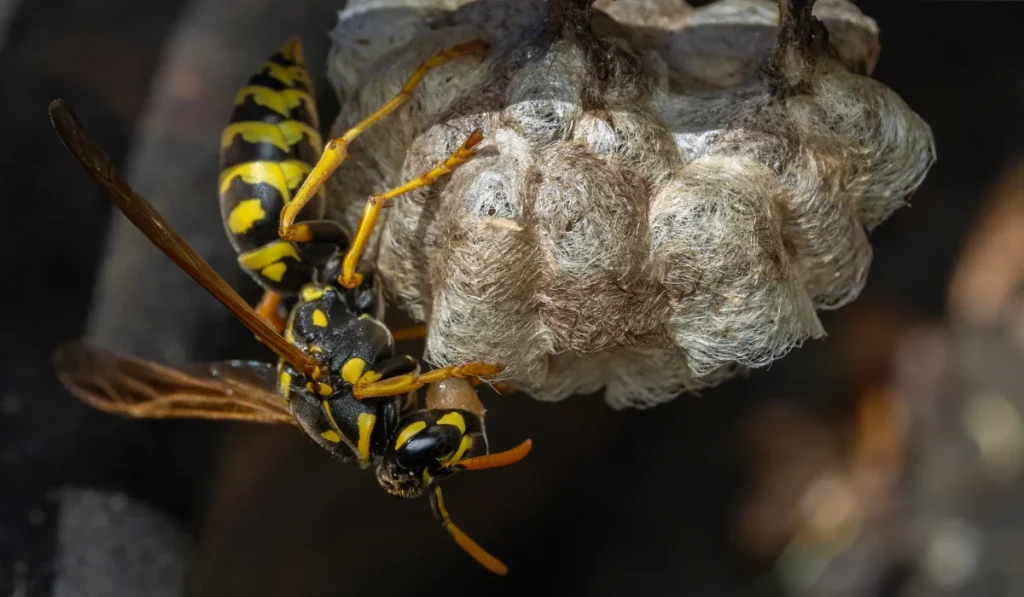
Yellow jackets are social wasps. They typically have bright yellow-and-black markings, relatively compact bodies, and much less visible body hair than honey bees. Paper wasps tend to look longer and more slender, with legs that are especially noticeable in flight.
Nesting habits can help narrow the identification. Frequent traffic through a hole in the ground or a small structural opening fits common yellow jacket behavior. Paper wasps are more often associated with exposed, open-comb nests attached beneath sheltered surfaces.
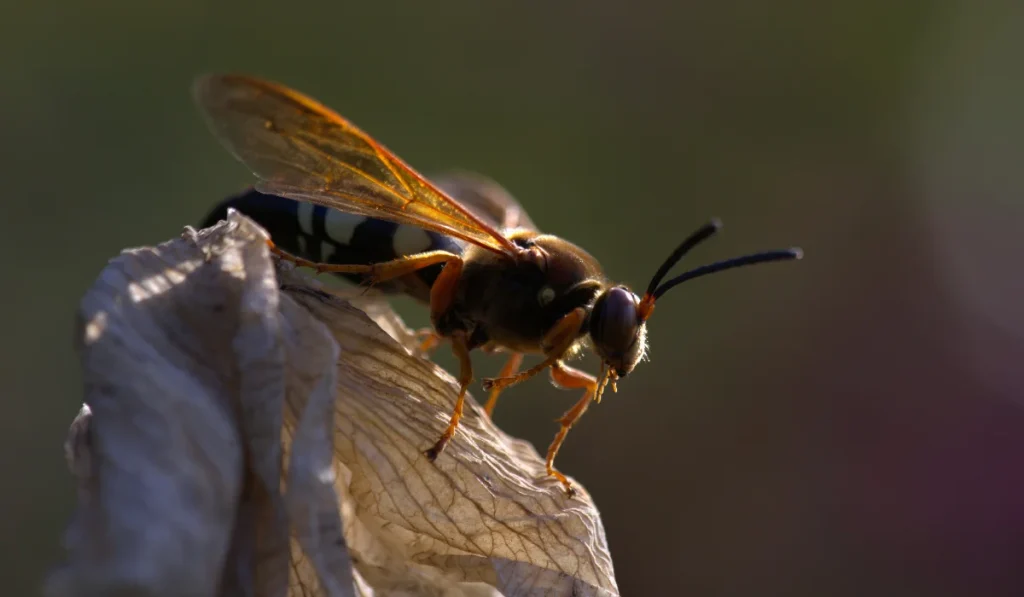
Other wasps behave differently again. Mud daubers in New Jersey, for example, are solitary wasps rather than members of a large social colony. They construct mud nests instead of operating from a shared yellow jacket nest.
When the insect or nest cannot be identified confidently, keep your distance rather than moving closer for a better look.
Signs a Yellow Jacket Nest Is Nearby
The strongest clue to a nearby nest is repeated, directional flight. One yellow jacket at a flower or trash can tells you little about where it came from. Multiple workers returning to the same point are much more informative.
Watch for:
- Workers repeatedly entering and leaving one ground opening
- Consistent traffic through the same wall or siding gap
- Yellow jackets following a regular path toward a building
- Activity concentrated around one section of landscaping
- A noticeable increase in wasps when people or equipment approach one area
A fixed flight path points toward a nest entrance rather than general foraging.
Where that entrance is located also matters. A nest beside a frequently used doorway, patio, play area, walkway, loading zone, or mowing route creates more opportunity for accidental disturbance than one well away from normal activity.
Why Yellow Jacket Nests Require Caution
Yellow jackets defend their colony when the nest is threatened, and they can sting more than once. That makes direct nest disturbance different from encountering an individual worker that is simply foraging.
Ground nests can be particularly easy to disturb with landscaping equipment. A mower, string trimmer, shovel, or footstep near the entrance can put someone close to defensive workers with little warning.
For most people, stings cause localized pain and swelling. People with an allergy to insect venom can have a much more serious reaction. The CDC’s guidance on stinging insects warns that insect stings can trigger anaphylaxis in allergic individuals and identifies it as a medical emergency.
The concern is therefore not every yellow jacket seen outdoors. It is close contact with an active nest, especially in an area people need to walk through, work in, or use regularly.
What Happens When Cold Weather Arrives
The yellow jacket colony active during summer does not continue indefinitely. Nests are used for one season.
Late in the season, reproductive queens leave and seek protected places to overwinter. The old queen and workers die as the season ends, while surviving fertilized queens are responsible for starting new colonies the following spring.
The old nest is not reused the next year. A future queen can still choose another suitable cavity on the same property, however, so previous activity does not mean the area will remain free of yellow jackets.
How to Reduce Yellow Jacket Encounters
Prevention is most useful when it addresses the things property owners can control: accessible food and the chance of accidentally disturbing a nest.
Limit Food Around Outdoor Areas
Late in the season, simple sanitation can make patios, gathering areas, and waste-storage locations less attractive to scavenging workers.
Useful steps include:
- Keep outdoor trash cans closed with secure lids.
- Clean up spills and food scraps promptly.
- Remove fallen fruit from beneath trees.
- Cover food until it is being served.
- Rinse food and drink residue from recyclable containers.
- Check open cans and cups before drinking outdoors.
BHB’s guidance on reducing food and trash sources that attract wasps also recommends keeping outdoor waste containers closed. Food management will not remove a nest, but it can reduce unnecessary foraging activity around places where people spend time.
Check for Flight Traffic Before Yard Work
Before mowing, trimming, digging, or working near retaining walls and planting beds, scan the area for workers repeatedly using one opening.
Occasional wasps moving across the property are less significant than a steady pattern of insects disappearing into the same hole or gap. If that pattern is present, avoid working directly around the entrance until the activity has been identified.
This small check is especially useful later in summer, when a concealed colony that attracted little attention earlier in the year may have developed substantial worker traffic.
When Professional Yellow Jacket Control Makes Sense
A yellow jacket passing through a property does not automatically call for treatment. Yellow jackets are predators with a role in the local ecosystem, and normal foraging away from people can often be left alone.
A nest deserves closer attention when:
- It sits beside a doorway, walkway, patio, play area, or work zone.
- Ground activity interferes with mowing, landscaping, or other maintenance.
- Workers are repeatedly entering a wall, soffit, or structural cavity.
- The nest entrance cannot be approached safely.
- Regular activity creates a sting concern for residents, employees, customers, or visitors.
Concealed structural nests are especially important to assess correctly. The visible opening may not reveal where the nest sits inside the building, and closing the gap before addressing the colony can redirect activity rather than resolve it.
BHB Pest Elimination serves New York City and Northern New Jersey. If repeated yellow jacket traffic points to a nest near your home or business, contact BHB Pest Elimination to schedule an inspection and determine the appropriate next step for the property.