

Cicada killer wasps in New Jersey become a problem when nesting is concentrated in lawns or develops beside walkways, patios, entrances, and other frequently used areas. These large ground-nesting wasps are generally less aggressive than yellowjackets, but females can move substantial amounts of soil while digging burrows, and several nests in one location can disrupt turf. Knowing what attracts cicada killers, how much sting risk they present, and when a nesting site warrants control can help homeowners respond appropriately.
Why Cicada Killers Become a Problem Around New Jersey Homes
Cicada killers are solitary wasps. Each female digs and provisions her own underground nest rather than living in a colony with workers and a queen. Several females can still select the same patch of suitable soil, which is why a lawn may have numerous burrows and a surprising amount of wasp activity in a relatively small area.
Most conflicts come from where the nests are located and how much digging is taking place. A few burrows along an unused edge of a property may cause little concern. Concentrated nesting in turf or close to areas people use every day can be much harder to ignore.
Multiple Burrows Can Disturb Turf
Female cicada killers excavate underground tunnels and brood cells. The digging pushes soil to the surface, leaving an entrance surrounded by loose dirt.
A few nests may create only minor cosmetic changes. Larger concentrations can have a greater effect. Rutgers New Jersey Agricultural Experiment Station notes that large numbers of cicada killers nesting in one area can damage turf, particularly around banks and access areas.
The condition of the lawn also matters. Cicada killers often choose places where vegetation is already sparse and soil is exposed. Heavy nesting can add to the disturbance, but poor turf may have made the location attractive before the wasps arrived.
Nests Can Interfere With High-Traffic Areas
Burrows beside a front walk, patio, play area, garden path, or commonly used section of lawn create more conflict than nests in a quiet corner of the property.
Adults often fly low around nesting sites, and males patrol small territories above the ground. A large wasp repeatedly flying toward someone can be unsettling even when the behavior is territorial rather than an attempt to sting.
Females can sting, so cicada killer activity in places where people regularly walk, work, or play deserves more attention than the same activity in an isolated section of the yard.
Suitable Nesting Conditions Can Persist
The adults are seasonal, but the conditions that attracted them may remain.
Sunny ground with sparse vegetation and well-drained soil can continue to provide suitable nesting habitat. If the same bare or thin area remains open, other females may use it in a later season.
For long-term management, improving the nesting site can be more useful than focusing only on the adults visible during summer.
Are Cicada Killer Wasps Dangerous to People?
Cicada killers are large enough to look threatening, but their behavior differs from that of social wasps that defend a shared colony.
The sex of the wasp also matters. Males and females behave differently, and only females are capable of stinging.
Male Cicada Killers Cannot Sting
Male cicada killers patrol nesting areas and may fly directly toward people, pets, lawn equipment, or other moving objects that enter their territory.
Rutgers notes that males can behave aggressively around nesting areas but cannot sting because they do not have a stinger. Their territorial flights can still be intimidating, particularly when several males are active over the same section of lawn.
Females Can Sting but Are Generally Non-Aggressive
Female cicada killers have stingers, but they primarily use them to paralyze cicadas that will be carried into underground brood cells.
The University of Maryland Extension’s cicada killer guidance describes cicada killers as generally non-aggressive toward people. Females are capable of stinging when handled or threatened, so they should still be left alone rather than caught or disturbed.
This behavior is one reason correct identification matters. A large black-and-yellow wasp near the ground is not automatically a cicada killer, and other stinging insects may respond differently around a nest.
Not Every Ground-Nesting Wasp Behaves the Same Way
New Jersey properties can host several types of solitary and social wasps. Their nesting habits, appearance, and level of defensiveness are not interchangeable.
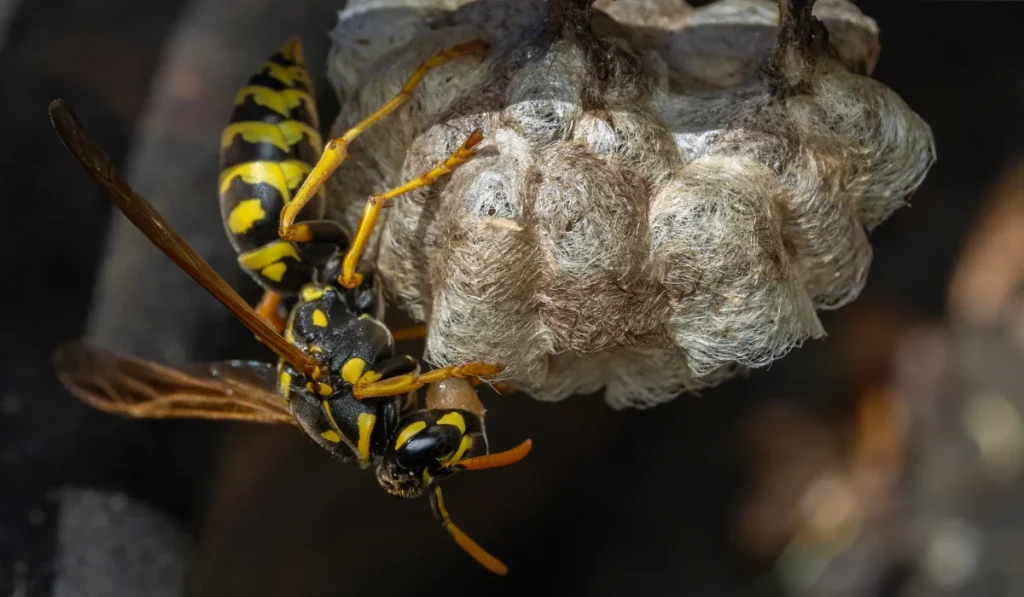
For example, mud daubers in New Jersey are also solitary wasps, but they build mud nests rather than cicada killer-style burrows. Yellowjackets are social wasps and can defend a shared colony.
Similar coloration is not enough to determine how a wasp should be handled. The differences among wasps and other stinging insects make species identification an important first step when activity is concentrated around the property.
How to Identify a Cicada Killer Wasp
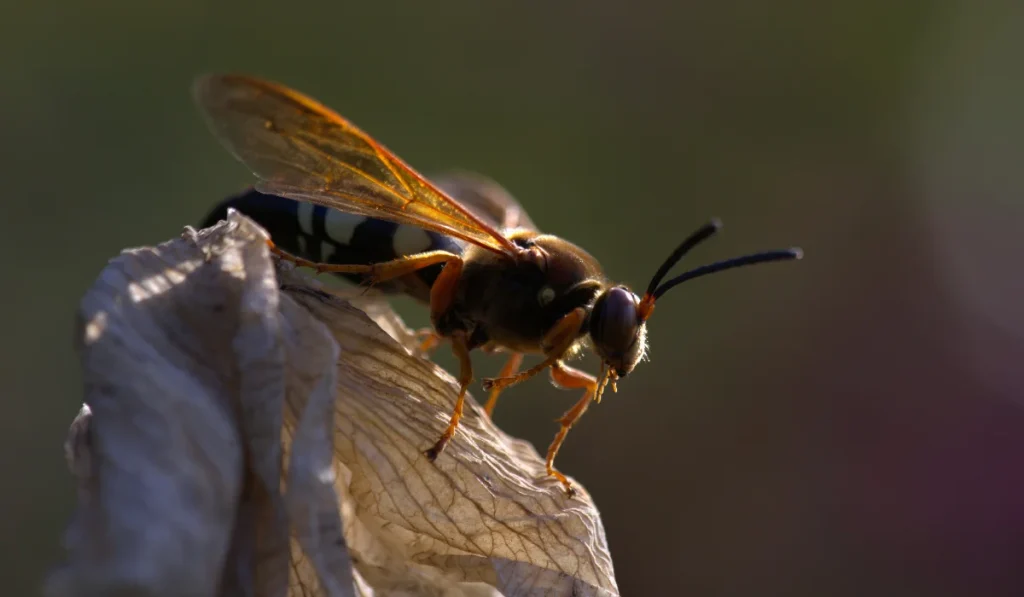
The eastern cicada killer, Sphecius speciosus, is a large solitary wasp associated with lawns and other sunny areas where females can reach suitable soil.
According to the NC State Extension guide to cicada killer wasps, adults measure approximately 1 1/8 to 2 inches long. They have black and yellow markings on the abdomen, orange legs, and rust-colored areas on the head, thorax, and wings.
Behavior can offer another clue. Cicada killers are often seen flying close to the ground around burrow entrances. Females may also be seen transporting cicadas back toward a nesting site.
When Cicada Killers Are Active in New Jersey
Rutgers reports that cicada killers can be seen in New Jersey from late July through August and into September. Their activity overlaps with the summer period when annual, or dog-day, cicadas are available.
This relatively short window explains why large wasps may suddenly become noticeable in a lawn that showed no cicada killer activity earlier in the year. During this period, adults mate, females excavate nests, and cicadas are collected for developing young.
Why Females Hunt Cicadas
A female cicada killer locates a cicada, stings it to paralyze it, and transports it to an underground brood cell. She lays an egg with the provisioned cicada, which becomes food for the developing larva.
Adult cicada killers feed on nectar. They hunt cicadas to supply their offspring, not as food for themselves.
Why Cicada Killers Choose Certain Yards
Cicadas nearby are only part of what makes a property suitable. Female cicada killers also need ground they can excavate.
Common nesting conditions include:
- Sunny locations
- Well-drained soil
- Bare or exposed ground
- Light-textured soil
- Thin or sparse turf
These conditions help explain why one section of a yard can have several burrows while nearby turf remains untouched. Dry slopes, thin lawn areas, exposed soil, and similar sunny sites can provide easier access for excavation.
This is also why improving the site is important for prevention. Killing or removing individual adults does not change bare soil or weak turf that remains suitable for future nesting.
How to Make Your Yard Less Attractive to Cicada Killers
The most practical preventive measures focus on reducing exposed ground in places where cicada killer nesting causes problems.
No lawn or landscape change can guarantee that cicada killers will never appear. The goal is to make frequently used areas less favorable for concentrated burrowing.
Improve Thin or Bare Turf
Dense turf leaves fewer open patches where females can start digging.
University of Maryland Extension recommends overseeding thin and bare lawn areas as a longer-term management measure. It also notes that temporary watering may discourage nesting in active areas because cicada killers favor well-drained soil.
Watering should still be appropriate for the turf and site. The objective is to correct exposed or sparse areas, not keep an otherwise healthy lawn unnecessarily wet.
Cover Exposed Soil in Landscape Beds
Sunny planting beds with open soil can also offer suitable nesting sites.
University of Maryland Extension recommends applying approximately 2 to 3 inches of mulch or establishing dense groundcover over bare soil. Both approaches reduce the amount of open ground available for excavation.
Where burrows repeatedly develop beside a walkway, entrance, or patio, improving coverage in that specific area can address the nesting conditions more directly than reacting to adult wasps each summer.
Confirm Active Nesting Before Considering Treatment
Large wasps flying across a property do not necessarily mean they are nesting there. Look for repeated activity around ground openings and loose excavated soil before assuming the yard contains cicada killer nests.
If treatment is needed, the insect should first be identified correctly. Any pesticide used must be labeled for the intended pest and application site and applied according to the current product label.
Cicada Killers Have a Beneficial Role
Cicada killers are predators that use cicadas to provision their offspring, while the adults feed on nectar. Their presence alone does not mean control is necessary.
Rutgers recommends tolerating cicada killers when practical. A small number of nests in a low-use section of a property may cause little disruption and can often be left alone through the seasonal activity period.
Control becomes more reasonable when nesting density, turf disturbance, or the location of the burrows interferes with normal use of the property.
When Cicada Killer Control Makes Sense in New Jersey
Professional evaluation is worth considering when numerous active burrows are concentrated in one area, excavation is noticeably disrupting turf, or nests are located beside entrances, patios, walkways, play spaces, and other areas people cannot easily avoid.
An inspection is also useful when the insect has not been positively identified. The correct response to a solitary cicada killer can differ from the response to a social ground-nesting wasp, so identification should come before treatment.
For homeowners dealing with cicada killer wasps in New Jersey, BHB Pest Elimination can inspect the activity, identify the stinging insect involved, and evaluate whether the location and extent of nesting call for control. If ground-nesting wasps are disrupting your yard or you are unsure what species is present, contact BHB Pest Elimination to schedule an inspection.