


Learn what attracts stinging insects to your yard, where they nest, and how to enjoy your outdoor space safely.
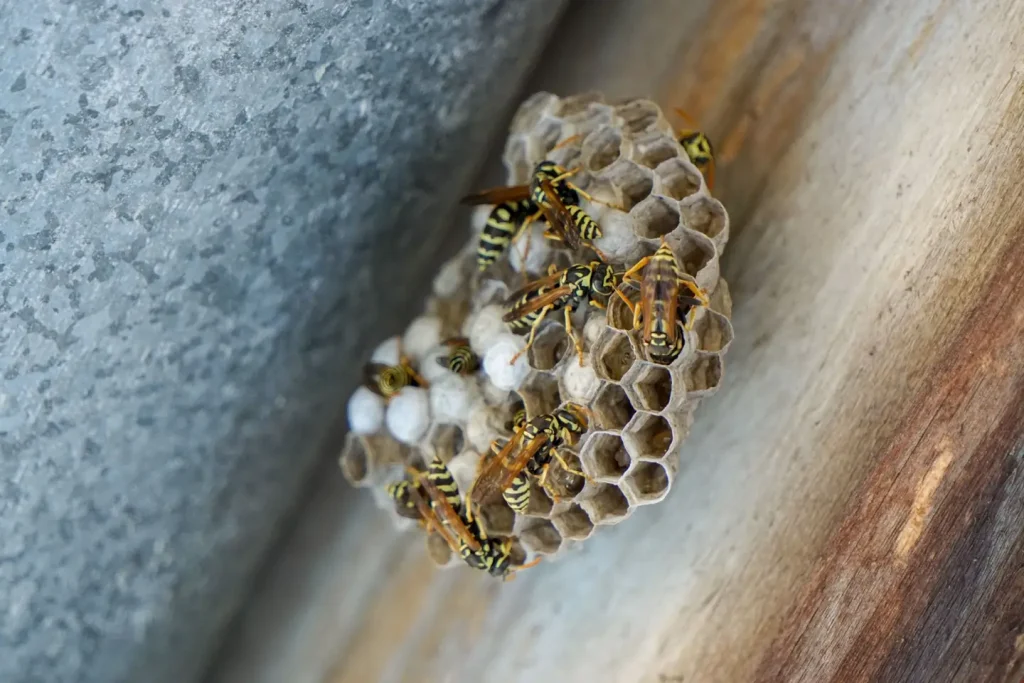
Wasps, hornets, yellow jackets, mud daubers, and carpenter bees are the stinging insects that commonly invade New York area properties. While beneficial in nature, they become dangerous once they nest close to people, delivering painful stings that can trigger allergic reactions.
Wasps, hornets, yellow jackets, mud daubers, and carpenter bees
Suitable nesting spots near food sources, including gardens, fruit trees, and trash cans
Trees, shrubs, ground holes, roof eaves, decks, porches, window shutters, and wood shingles
Painful stings that can cause large welts or severe allergic reactions; carpenter bees cause structural wood damage over time
Found a stinging insect nest on your property?
Stinging insect venom can cause reactions ranging from mild to life-threatening. Call BHB and our team will help you understand the right next step.
Suitable nesting spots near food are the two main things that drive stinging insects to a property.
Trees, utility poles, shrubs, bushes, and ground holes all offer stinging insects a place to build a nest.
Trash cans, recycling bins, gardens, and fruit trees give stinging insects an easy food supply.
Roof eaves, decks, porches, and window shutters offer secluded, protected nesting spots.
Carpenter bees create tunnels and nesting galleries in wood, causing costly structural damage over time.
BHB Pest Elimination helps customers enjoy their outdoor space without the threat of being stung, with services suited to your property's needs.

A professional inspection finds active nests, whether in trees, ground holes, or on the structure itself.
BHB provides the service needed to safely get rid of the nest and the insects in it.
Follow-up services help keep stinging insects from rebuilding in the same spot.
Sealing openings, trimming back branches and shrubbery, and filling in ground holes helps prevent new nests.
Tell us what you are seeing and whether this is for your home or business. Our team will help you with the right next step.
Prefer to talk it through?
Skip the form and call (201) 656-3380 now.
Their stings are painful for anyone, and can be dangerous for those allergic to the venom, with reactions ranging from mild to life-threatening.
Trees, shrubs, ground holes, and man-made structures like roof eaves, decks, porches, and window shutters are common nesting spots.
Yes — carpenter bees tunnel into wood to create nesting galleries, which causes costly structural damage over time.